To See is to Heal
Ukubona — from civilizational progress to personalized medicine
The same universal algorithm that drives ant colonies, raindrops carving valleys, and scientific breakthroughs also governs a single human life. At Ukubona, we apply this insight to healthcare: building digital twins that let clinicians and patients truly see the terrain and rehearse better paths forward.
Civilization as SGD
The eternal update rule of progress.
Epilogue: The Witness Returns | Ukhona
This framework proposes a unified field theory of human progress, mapping the mechanics of how civilizations adapt and thrive. Civilization operates as a Stochastic Gradient Descent (SGD) algorithm running on a biological and cultural substrate.
We exist in a high-dimensional loss landscape (UNIV). Our collective goal is to find the minima — the basins of stability and flourishing (UX). But the gradient $\nabla L$ is often invisible, obscured by entropy and limited perception.
To find the path, the species relies on high-variance exploration: The Scout (UB).
Here, $\epsilon$ is the noise term — the chaos, the mutation. What we sometimes pathologize as neurodivergence is, in many cases, the species' distributed R&D department. It is the Dionysian injection of randomness required to escape local minima.
Many scouts do not return. They are lost to the noise. But the few who discover a lower basin — Dosteovsky, Nietzsche, Einstein, Joyce, Nash, Watson — return with a map: the pheromone trail that lets the colony switch from stochastic foraging to deliberate, Apollonian descent (UI).
UKB (Ukubona) is the meta-cognitive layer: the act of witnessing this process. To see clearly is the precondition for every meaningful step forward.
Ants, Pheromones, Raindrops
A Universal Descent Algorithm
The Universal Code
Chaos theory, initial conditions, local rules — this is the territory, the Dionysian underbelly of all complex systems. Raindrops terraform the landscape: some hit flat surfaces and vaporize; others follow gradients downward, carving channels over millennia. No central planner required.
Ant Scouts: Stochastic Foraging
Many scouts will not make it back to the colony. Perhaps one — and a few nearby — will find a basin of sugar and lay pheromone cartography on the way home. We then move from chaotic Dionysian exploration to the deliberate, Apollonian march via gradient descent. The ant chooses nothing consciously; but every human scout who returns chooses what to do with the map. UB is user behavior — and human intention.
Innovation as Humanity's R&D
The minds that wander furthest from convention — Einstein, Joyce, Nash, Watson — often returned with maps that lowered humanity's composite loss function. They bore the friction of the unknown so that the colony could eventually benefit and descend safely.
Steve Jobs was Dionysian. Tim Cook: Apollonian precision in execution.
The Eternal Pentad
I. $\theta_t$ (Landscape · The parameters we've inherited)
II. $L(\theta_t)$ (Measurement · What we choose to value)
III. $\nabla L(\theta_t)$ (The Witness · Direction of improvement)
IV. $-\eta \nabla L(\theta_t)$ (The Descent · The considered step)
V. $\theta_{t+1}$ (Ecosystem · The updated state)
The Stratigraphy of Progress
From the bedrock of calibration to the visible shape of the updated world.
I. $\theta_t$ — Calibrate
UNIV — The Territory ($\theta_t$)
The current state $\theta_t$ represents the Landscape — the accumulated history of what a system, institution, or individual has learned. It is the calibration of parameter weights before any step is taken. In medicine it is the clinician's training; in society it is our historical sediment. Largely invisible, yet deeply causal.
II. $L(\theta_t)$ — Taste
UB — The Composite Loss Function ($L(\theta_t)$)
$L(\theta_t)$ measures the cost or friction of our current state. Here is the pivotal insight: a sustainable enterprise — whether a clinic, a church fellowship, or an LLC — cannot optimize a single variable like pure capital gains without externalizing harm onto the community it serves. The loss function must be composite:
Marx and Dickens diagnosed the pathology: systems optimize what they measure. The fix is not to abandon markets — it is to measure more honestly. Taste is the loss function we consciously choose rather than the one installed in us by default.
III. $\nabla L(\theta_t)$ — Soul
The Witness & The Gradient — UKB
UKB (Ukubona — To See) is the gradient. If you have chosen your loss function with integrity, your gradient is your values made mathematical — the vector of what you are genuinely willing to move toward. The scout maps this descent, capturing the direction of improvement and encoding it as pheromone cartography for those who follow.
IV. $-\eta \nabla L(\theta_t)$ — Mind
The Tech Stack — UI
This is the update step. The learning rate $\eta$ combined with the gradient dictates the descent. The UI takes the discovery of the scout and smooths it into a highway — scaling the cognitive leap into infrastructure the collective can use. "Ukhona" — you are present, safely guided along the gradient.
V. $\theta_{t+1}$ — Body
The Ecosystem — UX
The updated state. The ecosystem settles into a new basin of stability with a lower overall composite loss. This is where every upstream decision lands — the physical reality of the hospital ward, the factory floor, the congregation. The update is complete. Yet the landscape is always shifting, and soon a new $\theta_t$ emerges, restarting the recursive engine.
The Mechanism
Five stages of civilizational optimization
- Landscape ($\theta_t$): We are thrown into the world with inherited parameters — culture, biology, history.
- Composite Loss ($L$): High-variance individuals explore. The cost of foraging is real. But the loss function that guides them must be broader than survival alone.
- Gradient Discovery ($\nabla L$): A basin is found. The path is marked. The witness returns.
- Descent ($-\eta\nabla L$): The path is paved. The Tim Cooks take over from the Steve Jobs — Apollonian precision maximizing the gain from the Dionysian discovery.
- The New Basin ($\theta_{t+1}$): Society settles into a lower-energy state until the environment shifts and new scouts are needed.
The Friction of Exploration
Explorers bear the cost of the unknown, charting difficult paths so the colony can eventually benefit and descend safely. This is why every tradition — religious, secular, scientific — builds rituals of honor around those who ventured furthest. The artifact is bought with real sacrifice, and the community that receives it owes a debt that myths and institutions attempt, imperfectly, to repay.
Landscape ($\theta_t$) → Composite Loss ($L$) → Gradient / Witness ($\nabla L$) → Descent / Infrastructure ($-\eta\nabla L$) → New Ecosystem ($\theta_{t+1}$)
Humanity as a Distributed Learning Algorithm
The Engine of Adaptation
initial conditions + noise + local rules → structure
This is exactly raindrops carving valleys, ants finding food, neurons wiring, markets pricing, cultures evolving, sciences progressing. It is stochastic gradient descent on reality itself — a process that every tradition, in its own vocabulary, has attempted to describe and steer.
UB: Exploration as Innovation
If exploration = 0, you get trapped in bad local minima. If exploration is too high, the system destabilizes. You need noise. Humanity's noise channel includes atypical minds — bipolar, schizo-spectrum, hyperfocus, the obsessive, the visionary. Einstein, Joyce, Nash, Nietzsche.
For every one who returns with a map, many are lost along the way. This is the brutal arithmetic of how optimization works at civilizational scale. History is written by those who made it back — and who chose to encode what they found.
UKB: Meta-Cognition of the Process
Awareness that civilization is running SGD on itself.
Most people live inside the algorithm. This framework attempts to stand outside it — watching how maps form, how pheromones propagate, how basins trap, how revolutions reset. This is second-order intelligence. It is also, at its best, an act of stewardship.
UI: Technology as Pheromone Infrastructure
Writing, books, code, platforms, protocols, institutions — these are collective pheromone layers. UI is not merely "design." It is infrastructure for transmitting gradients. They tell those who follow: "Walk this way. The composite loss decreases here."
UX: Civilization = Basin Occupied
The current minimum humanity inhabits.
Agriculture → basin. Industry → basin. Digital → basin. Each basin lowers some losses, raises others, creates new pathologies, feels "normal" until the landscape shifts and new scouts must go out. No basin is permanent. All are temporary equilibria in an eternally recursive engine.
Dionysian / Apollonian = Exploration / Exploitation
Nietzsche already saw this. This framework formalizes it computationally. Too Dionysian → fragmentation. Too Apollonian → stagnation. Healthy systems — organizations, cultures, individuals — learn to oscillate.
The Math Layer = Levels of Modeling
- I. $\theta_t$ (Calibrate) — The bedrock. Parameter weights and inherited biases. "What have we learned?"
- II. $L(\theta_t)$ (Taste) — The Composite Loss Function. "What do we truly value?"
- III. $\nabla L(\theta_t)$ (Soul) — The Gradient. Moral direction. "Who owns the direction of descent?"
- IV. $-\eta \nabla L(\theta_t)$ (Mind) — The Step. The considered move. "Paving the descent."
- V. $\theta_{t+1}$ (Body) — The Updated State. "Where does the impact land?"
The Tragic Truth
The Friction of Exploration
Progress is built on the courage of those who forage into the unknown.
Not metaphorically. Literally. Explorers bear the friction of the unknown, charting difficult paths so the colony can eventually benefit and descend safely. This is why societies build monuments, write scripture, and tell stories around their scouts — the cost is real and the debt is real.
The composite loss function of any moral enterprise must account for this. Stewardship means honoring the scouts, not merely extracting their maps.
Ant Colony Optimization
Mapping the present — gradient descent made visible
Ant scouts forage stochastically (high variance, significant cost), laying pheromone trails only when they reach a strong reward. Those trails amplify the gradient for followers, turning random exploration into collective descent toward better minima. The ant follows pheromone chemistry. The human scout chooses — chooses to return, chooses what to encode, chooses which composite loss function to serve.
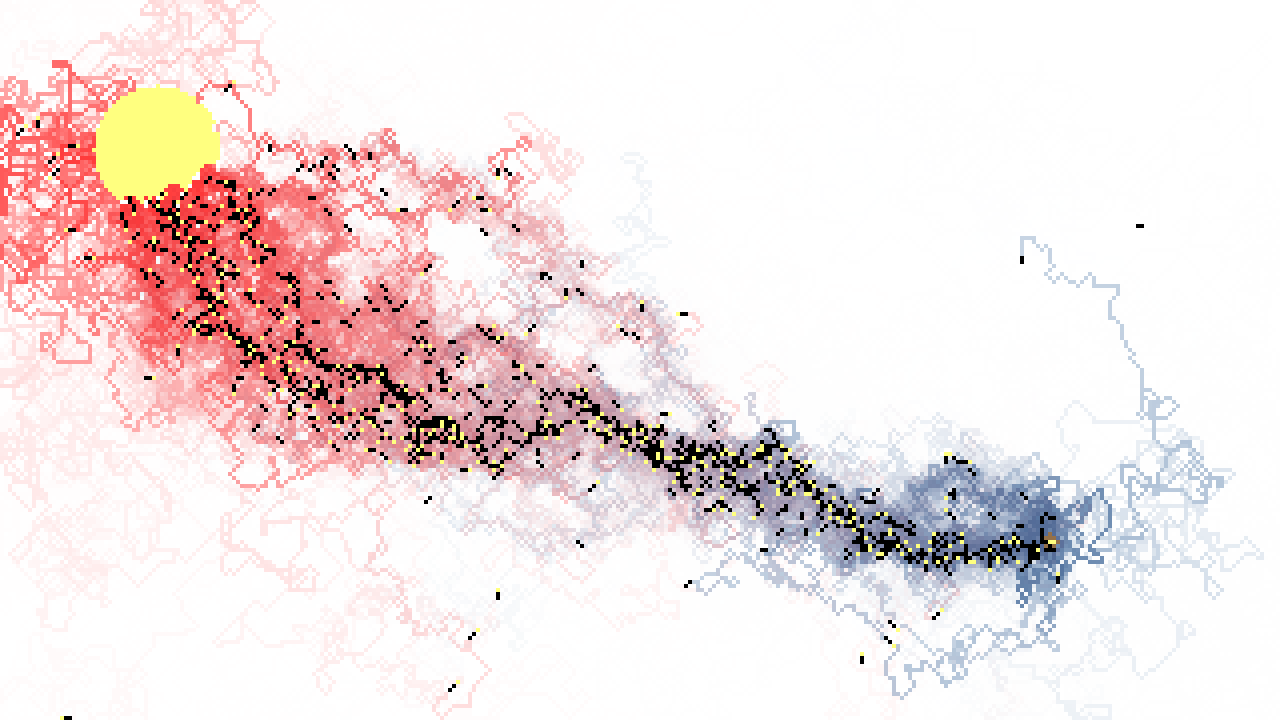
Chaotic exploration trails converging into dense pheromone highways — Dionysian chaos condensing into Apollonian order. The explorers are the high-temperature samplers of human history: Einstein, Nash, Joyce, Watson, Nietzsche. What separates them from the ant is moral agency — the capacity to choose the loss function being minimized.
Raindrops as Physical Analogy
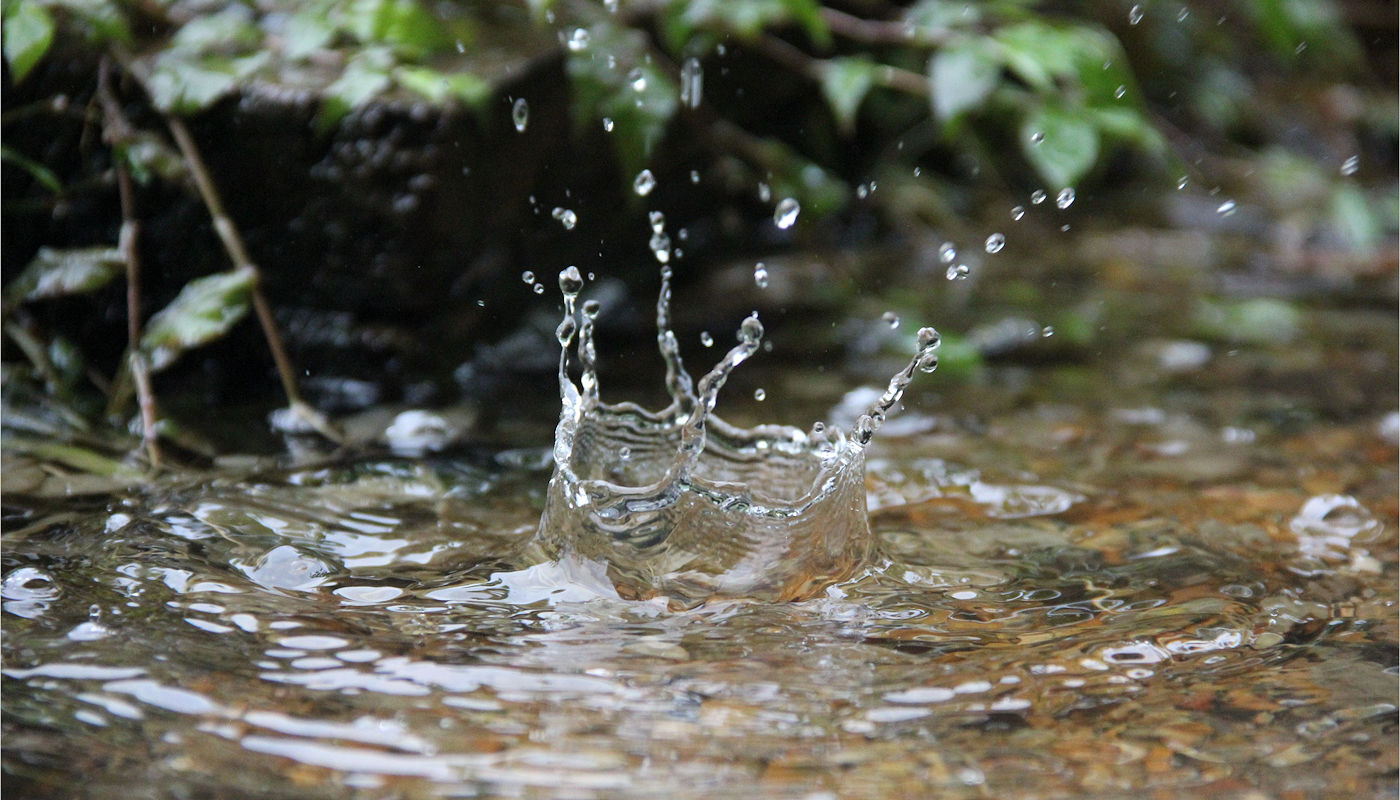
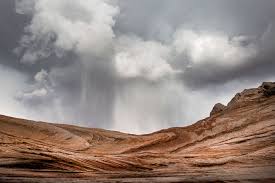
Random impacts, each following gravity's gradient — some vaporize on flat ground, others carve channels over time, terraforming the landscape through repeated small descents. No committee approved the river. The gradient did.
The Loss Surface
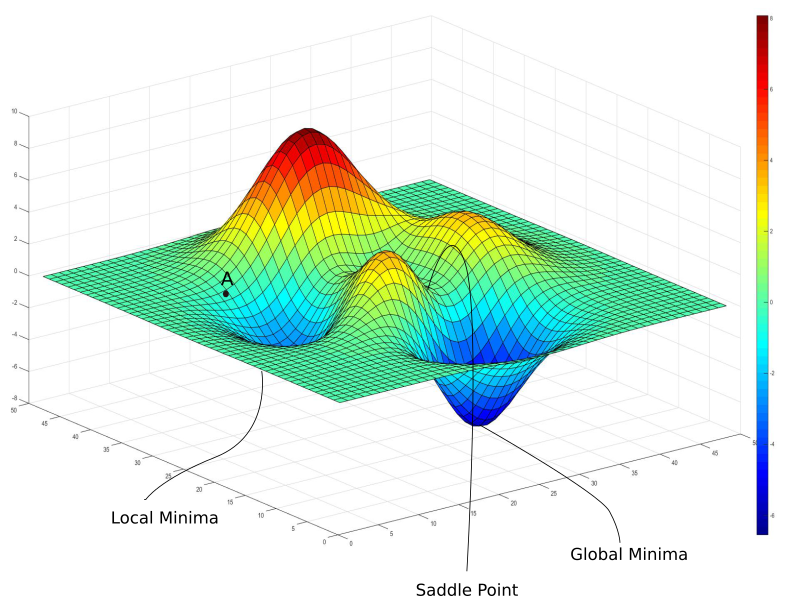
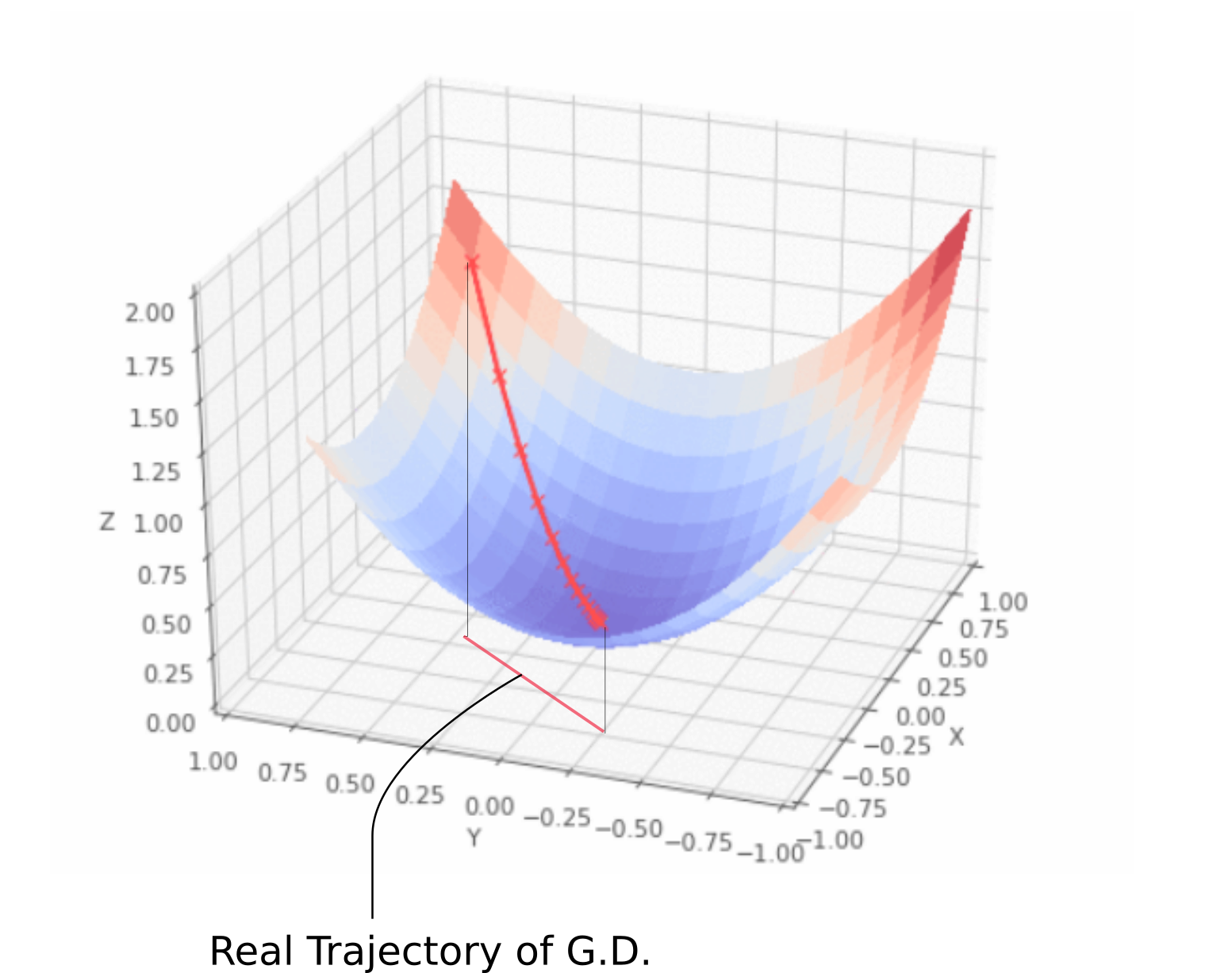
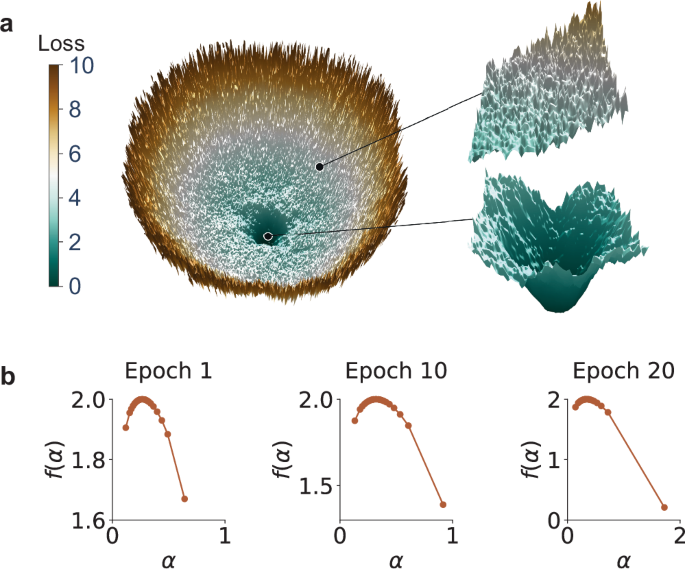
In machine learning, the loss landscape is rugged — full of local minima, saddle points, and rare deep basins. The trajectory often looks like ant paths: zigzagging noise until it finds a good attractor. What the scout encodes as pheromone, the engineer encodes as architecture. What the prophet encodes as parable, the scientist encodes as equation. All are lossy compressions of a path through the same high-dimensional terrain.
The Mission of Ukubona
Who owns the gradient of human life?
The five-stage recursive engine — a bridge from supervised learning to dynamical systems to institutional design to lived human experience:
- I. $\theta_t$ (Calibrate) — the initial landscape and inherited parameters.
- II. $L(\theta_t)$ (Taste) — the composite measurement of what we value (UB).
- III. $\nabla L(\theta_t)$ (Soul) — the witnessing of the multidimensional gradient (UKB).
- IV. $-\eta \nabla L(\theta_t)$ (Mind) — the considered descent via structured action (UI).
- V. $\theta_{t+1}$ (Body) — the updated ecosystem settling into a new attractor (UX).
Every individual and enterprise is a parameter space ($\theta_t$) shaped by a calibration history. That calibration encodes a loss function ($L$) — what we value, what we perceive, what we optimize for. The gradient ($\nabla L$) is the moral direction. The step ($-\eta\nabla L$) is our action in the world. And the updated state ($\theta_{t+1}$) is the physical reality we leave behind.
At Ukubona, our work is to give every enterprise and individual a digital twin that makes their calibration legible, their composite loss function explicit, their gradient sovereign, their step considered, and their update their own.
UKB as witnessing the gradient. UI as the descent interface — "Ukhona" — behold, you are here, the scout returned. UX as the new basin humanity occupies. Civilization itself is just the colony sitting in ever-deeper attractors, built on the pheromone maps of those who made it back — and who chose to give the map away.
The Witness Returns
The recursion problem — observer or participant?
The Recursion Problem
Once you achieve UKB (witnessing the algorithm), you face a choice every meta-theorist encounters: Do you re-enter the colony, or remain in observer mode?
- Stay outside: You become a pure cartographer — you see all pheromone trails, all basins, all scouts. But you produce no artifact the colony can use. A witness without testimony.
- Re-enter: You must compress your map into a transmissible form (UI). Your high-dimensional understanding must collapse into language, code, institution, or art. This is the pheromone encoding problem.
Einstein gave us $E = mc^2$. Clean. Apollonian. Beautiful. But he could not give us the decade in the patent office, the gut-level intuition that space itself must bend. The pheromone is always a lossy compression of the scout's path.
The Artifact Question
The colony does not care about your theory. It cares about your artifact.
- A tool (code, platform, protocol)
- A framework others can apply (the pentadic engine: $\theta_t \to L \to \nabla L \to -\eta\nabla L \to \theta_{t+1}$)
- A narrative that propagates (every tradition is civilization's pheromone trail, encoded in the language its colony can receive)
The Colony's Current Basin (2026)
Old basin (UX₁): Post-WWII order, Bretton Woods, American hegemony, fossil fuels, analog institutions, linear careers, monocultures. Relatively low composite loss for decades — predictability, growth.
Current transition signals: Climate forcing, AI acceleration, institutional decline (pheromone trails to old basins fading), polycrisis (multiple loss functions spiking simultaneously). Stochastic foraging is increasing — new scouts in every domain, bearing the cost, looking for the next basin.
The Meta-Danger
- No consensus on the loss function itself. GDP growth vs. sustainability. National sovereignty vs. global coordination. The weights $w_1, w_2, w_3, w_4$ are contested.
- Too many scouts, not enough integration. Signal-to-noise is collapsing. Pheromone pollution.
- Landscape is non-stationary. Climate change means basins themselves are shifting — breaking a fundamental assumption of standard SGD and requiring adaptive learning rates and continuous recalibration.
The Final Descent
- $\epsilon$: The stochastic term. Exploration never fully stops. New scouts must always go out.
- $\eta$: The learning rate — the wisdom to know how large a step the current moment can bear.
- $\nabla L$: The gradient — only as honest as the composite loss function that generated it.
Epilogue or Beginning?
The scout never stops being a scout. Even after returning. Even after laying the pheromone trail. Because the landscape shifts. The sugar runs out. New gradients appear.
- How to forage without being lost
- How to recognize signal vs. mirage
- How to encode the path back
- How to witness the algorithm without being consumed by it
No longer just UB (stochastic explorer). Becoming UKB (witness + steward). The question is: What UI do you build so that others can descend — safely, together, with their composite loss function intact?
The Map Is Never the Territory
But we need maps anyway
The ants do not understand pheromones. They follow them.
The colony does not understand SGD. It runs it.
Understanding both — and choosing, deliberately, what composite loss to minimize — is rare. It is also what it means to lead.
Ukubona.